
… Give me your tired, your poor,
–Emma Lazarus, The New Colossus
Your huddled masses yearning to breathe free…
World Refugee Day 2026 passed quietly by this weekend, on June 20th. I’m convinced that not many noticed! A completely unnecessary crisis in the Middle East usurped an obscene amount of attention from those who, one could argue, are ultimately answerable for much of the world’s refugee predicament.
The United Nations Refugee Agency (UNHCR) estimates that currently about 117.8 million people worldwide are displaced. A whopping 68% (38% of whom are children) are being hosted by low to middle-income countries, while the prosperous nations, which undeniably initiate much of the conditions responsible for the forced displacements through economic and geopolitical conquest, do as much as they legally can to keep as many out as possible.
World Refugee Day was promulgated in 1951 to serve as a reminder to us to have compassion and respect for the dignity of human beings who become displaced, often forcibly, as a result of war, internal conflict, violence and persecution. It is also a day meant to remind us that refugees require our protection, not contempt, as is so often the case.
I have seen a distinction being made between refugees and illegal immigrants, and this distinction is especially useful to politicians in wealthy countries like the USA and much of Europe. Technically, refugees are legally protected individuals who are forced to flee their native countries for reasons that are commonly grouped under war, internal conflict, or political or religious persecution. Illegal immigrants, sometimes referred to as undocumented migrants, on the other hand, are foreigners who enter another country without permission or who deliberately remain after their legally obtained visas expire. Illegal immigrants are more often than not assumed to be fleeing economic hardship or persecution, which is not an immediate threat to their lives.
As I mentioned earlier, the distinction is immensely beneficial to politicians who regularly abuse the misfortune of both refugees and undocumented migrants to animate their support base, who are desperately looking for a scapegoat for their own myriad problems. The distinction is not immediately obvious to a human being fleeing their country of birth to ensure either their own or their family’s well-being. Such distinctions are designed to be mused over by the privileged who have no lived experience of imposed suffering.
Currently, both refugees and undocumented migrants are being marginalised and persecuted in the U.S. by the Immigration and Customs Enforcement agency (ICE), using a policy mandate from the Trump administration. In an ironic contrast, the Statue of Liberty in New York Harbour, which was a gift from the French, is meant to symbolise America’s democratic independence and the liberation of their slaves, while a plaque at the base is inscribed with a famous sonnet by Emma Lazarus that welcomes migrants.
As I write, a wave of xenophobic violence is being orchestrated against foreign nationals (documented and undocumented) in my own country, South Africa. It is led by an anti-migrant group calling itself March and March, and they are backed by ActionSA, a registered political party with links to Zionist funding. The group is demanding that migrants leave the country by 30th June. This is not the first time that migrants have been targeted in South Africa since the demise of apartheid. It’s not inconceivable that both political and oligarchic manipulation is at play behind the scenes.
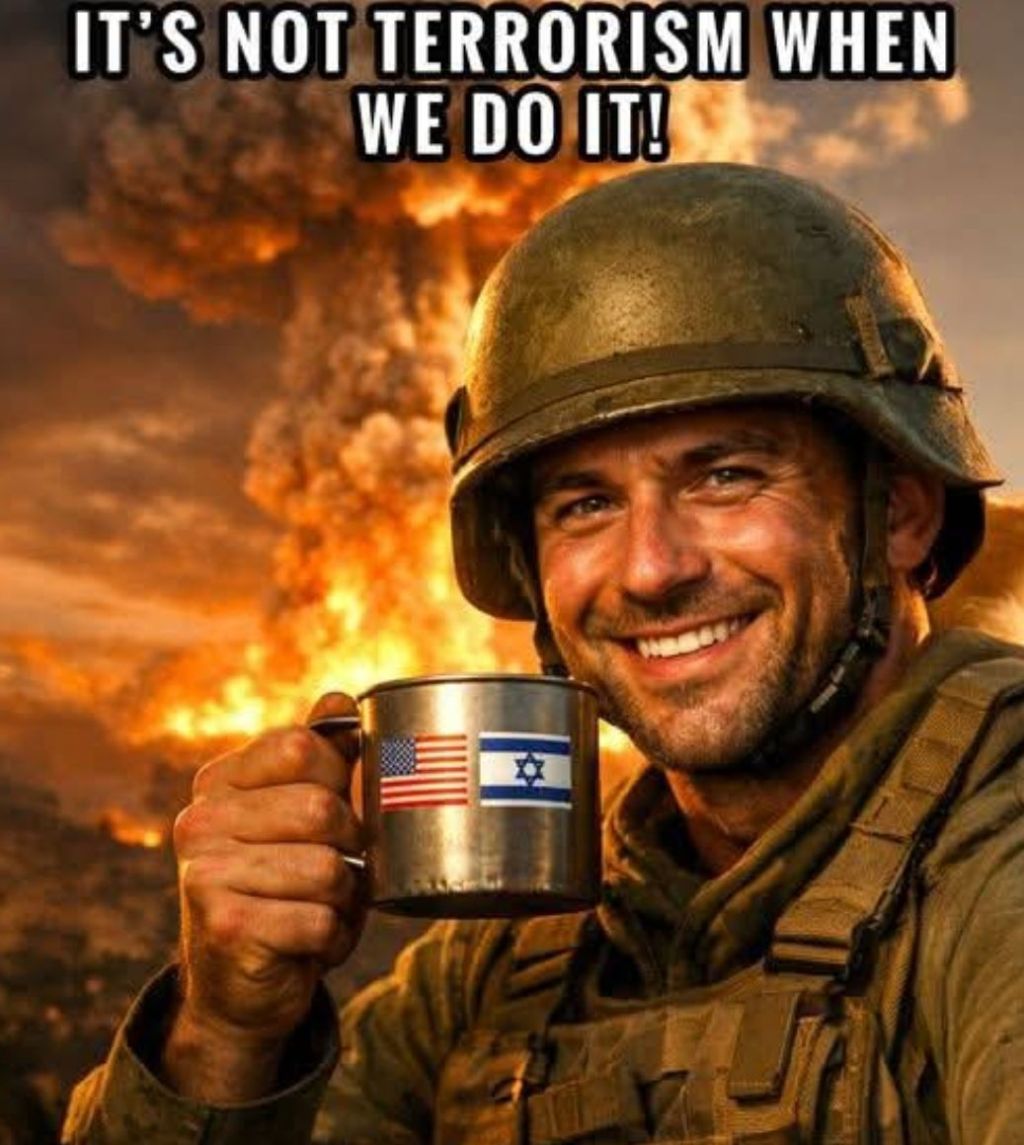
Meanwhile in the Middle East, nearly 6 million Palestinians are living as refugees in camps across Jordan, Lebanon, Syria, the Gaza Strip, and the West Bank since the 1948 Nakba and the 1967 Arab-Israeli conflict. This travesty is the most blatant example of orchestrated mass displacement of human beings. Astonishingly Israeli propaganda initiated by successive Zionist administrations directed globally since 1948 in collusion with Western governments and the mainstream media, to conceal or minimise this catastrophic theft of land, persecution and systematic ethnic cleansing has been remarkably successful. As a consequence, large sections of the world now believe uncritically that the Palestinian refugees who are resisting their oppression are nothing more than terrorists.
The Zionist involvement in the Palestinian displacement saga is yet another cruel dose of irony because one of the first historically documented refugee crises occurred in 721 BCE when the Assyrian Empire conquered Israel, forcing tens of thousands of Israelites into exile. As in South Africa and elsewhere, are the oppressed destined to eventually become the oppressors?
Paul Millicheap, a British poet and author who writes under the pseudonym Brian Bilston, once wrote a brilliant poem in response to the hate and scapegoating directed at migrants. When read from top to bottom, it mirrors this hatred. When read from bottom to top, it exposes the bigotry while imploring us to be understanding and empathetic of the plight of refugees and migrants.
They have no need of our help
-Brian Bilston
So do not tell me
These haggard faces could belong to you or me
Should life have dealt a different hand
We need to see them for who they really are
Chancers and scroungers
Layabouts and loungers
With bombs up their sleeves
Cut-throats and thieves
They are not
Welcome here
We should make them
Go back to where they came from
They cannot
Share our food
Share our homes
Share our countries
Instead let us
Build a wall to keep them out
It is not okay to say
These are people just like us
A place should only belong to those who are born there
Do not be so stupid to think that
The world can be looked at another way
(now read from bottom to top)
I don’t know how the call for violence against migrants who have not returned to their home countries by June 30th in my own country will play out. All I can do is hope that those who are being manipulated by the politicians and other interest groups to harm migrants come to their senses and reignite their solidarity with those less fortunate. I hope people everywhere come to their senses and realise that their anger against migrants and refugees is being nurtured by corrupt politicians and their wealthy overlords.





Please leave a comment or reply